.png "English")


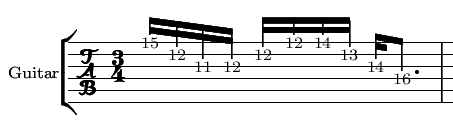
Guitar arpeggio exercises are an additional tool to include into your practice time. These will help spruce up your right and left hand methods since it's mostly picking.
Arpeggio means that you are trying to play a shattered chord. This means that you're playing notes one at a time rather than playing all the strings like you do when strumming. You are still chording with the left hand but simply picking or using finger style along with the right.
The easiest exercise if you are a newcomer is to place your fingers on the fretboard to make a chord and simply pick each string all the way up from E to E then back down. You can play whole tunes in this way by choosing each chord similar to this while you switch up chords. Sometimes you'll have to work on your timing a little bit, however, you will figure it out soon especially if you know the song by heart.
Another exercise is to complete the same thing but omit strings. This can build your right hand's awareness knowing where each string is. Oftentimes at first you may miss a lot but this would enhance that accuracy and reliability.
Try out creating your own patterns too. There aren't any guidelines to what workouts that you need to do. Just make up something and stick to it. But what ever you decide to do, act as disciplined enough to stick to it so as to practice a sequence.
One tip is to play these exercises with some type of beat in the background to ensure you remain on rhythm. You possibly can increase the rhythm as the exercise becomes simpler that may help you learn how to go quite a bit faster. Be cautious that you just don't give up quality for pace. Whenever actively playing arpeggio, your goal is for each note to be crisp and clear.
Arpeggio means that you are trying to play a shattered chord. This means that you're playing notes one at a time rather than playing all the strings like you do when strumming. You are still chording with the left hand but simply picking or using finger style along with the right.
The easiest exercise if you are a newcomer is to place your fingers on the fretboard to make a chord and simply pick each string all the way up from E to E then back down. You can play whole tunes in this way by choosing each chord similar to this while you switch up chords. Sometimes you'll have to work on your timing a little bit, however, you will figure it out soon especially if you know the song by heart.
Another exercise is to complete the same thing but omit strings. This can build your right hand's awareness knowing where each string is. Oftentimes at first you may miss a lot but this would enhance that accuracy and reliability.
Try out creating your own patterns too. There aren't any guidelines to what workouts that you need to do. Just make up something and stick to it. But what ever you decide to do, act as disciplined enough to stick to it so as to practice a sequence.
One tip is to play these exercises with some type of beat in the background to ensure you remain on rhythm. You possibly can increase the rhythm as the exercise becomes simpler that may help you learn how to go quite a bit faster. Be cautious that you just don't give up quality for pace. Whenever actively playing arpeggio, your goal is for each note to be crisp and clear.
Want to find out more about Best Infant Car Seats, then visit the author's site at infantcarseatshop.org to find about Britax Infant Car Seat.
Article Source: http://ArticleDirectory.com
Article Source: http://ArticleDirectory.com


